An attractive photograph that cannot be used in the required layout is not fully successful.
Marketing teams do not need someone who simply operates a camera well. They need someone who understands that the finished photographs have a job to do.
Pay attention to the questions being asked
The first conversation can reveal a great deal about the photographer’s approach.
Do they immediately begin discussing equipment and available dates, or do they ask about the organisation, audience and objectives?
Useful questions might include:
Why do you need new photography?
Who is the priority audience?
Where will the images appear?
Which messages need to be communicated?
What photography do you already have?
Which people and activities need to be included?
Are there fixed timings or access restrictions?
What would make the shoot successful for your team?
These questions show that the photographer is trying to understand the brief rather than applying the same approach to every organisation.
That does not mean every project needs several lengthy meetings. A focused press assignment may require a much simpler conversation.
The planning should be proportionate, but the purpose should always be understood.
Our practical guide to planning a business photoshoot explains the information that helps turn photography time into a useful marketing asset.
Consider how the photographer works with people
Most people are not professional models.
Some colleagues will enjoy being photographed. Others may feel uncomfortable before the camera has even been taken out of its case.
A good business photographer should recognise that and help people through the process.
This may involve:
Explaining what will happen
Giving clear and straightforward direction
Photographing people during genuine activities
Avoiding unnatural poses
Allowing enough time for people to settle
Providing reassurance
Treating everyone with patience and respect
The experience matters because it affects the finished images.
People who feel valued and comfortable are more likely to look natural, confident and approachable.
This is particularly important when photography is intended to communicate trust, culture or teamwork.
During our colleague profile picture sessions, people can review their images on an iPad and choose their favourites immediately. This gives them some control over the process and removes the worry of not knowing which photograph will be selected.
More information is available on our business portraits page.
Ask how the photographer handles real working environments
A business photoshoot rarely happens in a perfectly controlled space.
People become unavailable. Meetings overrun. Machinery stops. Weather changes. Rooms are occupied. Refurbishment work may not be complete.
The photographer needs to adapt without losing sight of the priorities.
During a recent care-home assignment, for example, we adjusted the order of the photography around activities, meal times and the manager’s meetings. Some refurbishment was still being completed, so we worked together to choose the strongest available locations and remove temporary information that would quickly date the images.
The original concern was that the shoot might produce little more than wide photographs of empty rooms.
Instead, we concentrated on the care, compassion and professionalism of the team.
This ability to respond is particularly important for half-day and full-day commercial assignments. A rigid checklist can waste valuable time when the organisation’s working day changes.
The photographer should be able to follow the plan without becoming trapped by it.
Understand what is included in the quotation
Prices are difficult to compare when the quotations include different services.
Before choosing a business photographer in Lincoln, check whether the price covers:
Pre-shoot planning
Photography on site
Professional image selection
Individual processing
Commercial usage rights
Online image delivery
Travel
Parking or other expenses
The expected turnaround time
Immediate images for press or social media
Additional locations
Drone photography, where required
Usage rights are particularly important.
Some photographers charge according to how, where and for how long the images will be used. That may be entirely appropriate, but the organisation needs to understand the arrangement before commissioning the work.
Our commercial photography packages include commercial usage rights for the supplied images. They are designed to give organisations a clear understanding of what is included from the beginning.
Transparent commercial photography packages and starting prices also make it easier to decide whether a focused, half-day or full-day shoot is likely to be appropriate.
Check the delivery times
Marketing teams often need images quickly.
A press release may have a fixed deadline. Photographs from an event may need to be shared while it is still happening. A website project can be delayed when the development team is waiting for content.
Ask:
When will the completed gallery be delivered?
Can selected images be provided during the shoot?
How will the files be transferred?
Will the images be suitable for both print and digital use?
What happens when an urgent turnaround is required?
Our standard commercial photography packages include delivery within three working days. Selected professional images can also be sent during an assignment when immediate PR or social-media content has been agreed.
Fast delivery still needs to be reliable.
A promise of speed has little value when the images are inconsistent, poorly processed or difficult for the marketing team to use.
Decide whether local knowledge will help
Choosing a photographer based in Lincoln can provide practical advantages.
A local photographer may already understand:
Familiar venues and locations
City-centre access
The mix of historic and modern working environments
Travel times across Lincolnshire
Local organisations and sectors
The practical challenges of photographing around a busy city
Opportunities for recognisable local context
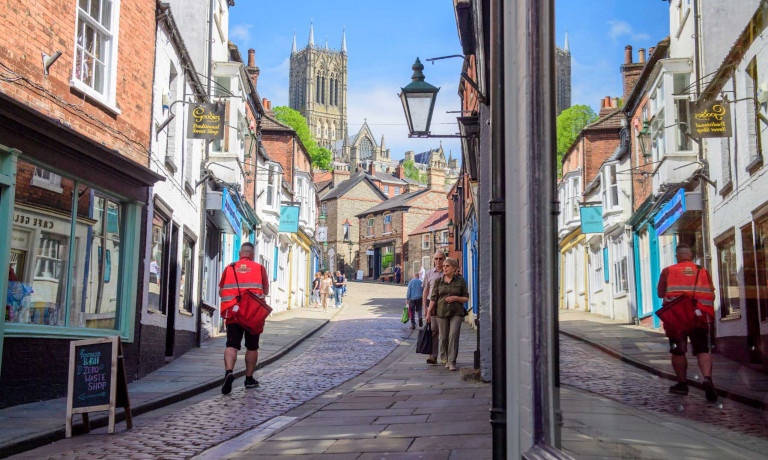
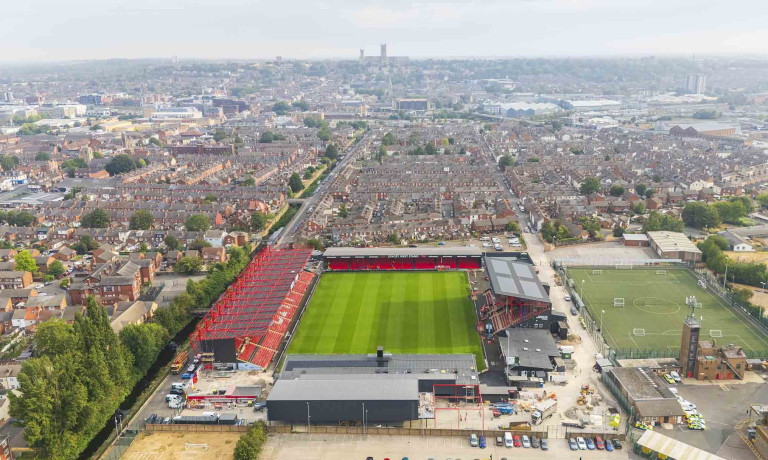
Chris Vaughan Photography has worked at locations including Lincoln Cathedral and Lincoln City Football Club, alongside businesses, public-sector organisations and agencies across Lincolnshire.
That experience can make planning more efficient.
However, local knowledge should not be the only reason for choosing someone.
The nearest photographer is not necessarily the best fit. Relevant experience, planning, reliability and the way they work with people remain more important than distance alone.
We are based in Lincoln and regularly work throughout Lincolnshire, the East Midlands, London and across the UK. That gives organisations the convenience of a local partner without restricting the service to local assignments.
Consider any specialist requirements
Some briefs require more than standard ground-level photography.
Your organisation may need:
Drone photography
Images delivered directly from the location
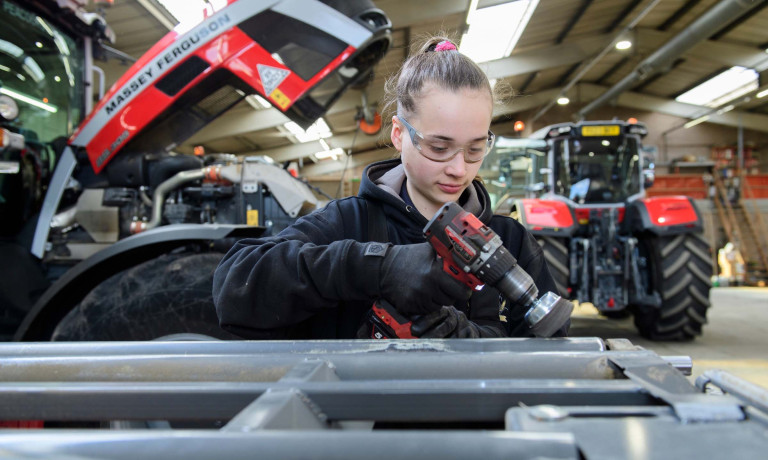
Photography inside an industrial environment
Multiple colleague profile pictures
Coverage across several sites
Work around vulnerable people
Photography involving safeguarding requirements
Access to restricted or safety-critical areas
Check whether the photographer genuinely offers those capabilities.
Drone photography, for example, requires safe and legal planning. The photographer must consider the location, weather, airspace, nearby people and property, and any need to communicate with air traffic control.
It should not be presented as simply adding a few aerial photographs while the photographer is already on site.
Our drone photography service can be commissioned independently or incorporated into broader commercial photography projects where conditions allow.
Look for partnership rather than order-taking
A photographer should listen carefully to the brief.
That does not mean they should agree unquestioningly with every request.
Professional experience sometimes means explaining that a planned schedule is unrealistic, a particular location will not work or a different approach could produce more valuable images.
That challenge should be constructive.
The organisation understands its business, people and audience. The photographer understands how those things can be communicated visually.
Valuing both areas of expertise creates better results.
At Chris Vaughan Photography, we work in partnership with organisations rather than simply working for them. Our aim is to adapt the approach around the client’s objectives while never compromising image quality or the experience of the people involved.
That also means recommending a smaller package when it will meet the requirement. The best solution is not automatically the longest or most expensive shoot.
The best photographer may not be us
A trustworthy guide should acknowledge that Chris Vaughan Photography will not be the right choice for every assignment.
We specialise in business and commercial photography.
We do not photograph weddings. We are not a large-scale film production company, and we are unlikely to be the right fit for an organisation whose only priority is finding the lowest possible quote.
Our strongest working relationships are with organisations that:
View photography as an important marketing tool
Want to work collaboratively
Respect the people involved in the shoot
Value preparation and professional delivery
Need authentic images with a clear purpose
Want a reliable partner rather than a one-off supplier
Being honest about that is important.
A successful relationship needs to work for both sides. Mutual respect, clear communication and a positive approach create the conditions for better photography.
Why organisations choose Chris Vaughan Photography
Our commercial photography experience reaches back to 2000, with Chris Vaughan Photography established in 2011.
Since then, we have photographed organisations across sectors including:
Construction and property
Manufacturing and engineering
Public services
Energy
Education
Sport
Tourism
Professional services
Corporate events
Marketing and communications
We bring a press-photography background to commercial assignments, which means looking for the people, moments and stories behind an organisation rather than concentrating only on formal pictures.
We also understand that many people do not enjoy being photographed. Helping colleagues relax is part of the job, not an inconvenience surrounding it.
The purpose is to create modern, useful imagery while ensuring that people feel respected and comfortable throughout the experience.
Making the right choice
The best photographer for your business in Lincoln should be judged by more than one impressive portfolio image.
Look at the complete service.
Does the photographer understand your organisation’s goals? Can they work confidently within your environment? Will they help colleagues feel comfortable? Are the pricing, usage rights and delivery arrangements clear? Can they contribute ideas rather than simply follow instructions?
Most importantly, will the finished images help your organisation communicate?
The right commercial photographer should leave you with more than photographs that look good on the day they are delivered.
They should create a purposeful image library that supports your website, recruitment, public relations, social media and future marketing.
That is the difference between booking someone to take pictures and choosing a visual communications partner.
Explore our business and commercial photography service, review our photography packages, or schedule a free online consultation to discuss whether Chris Vaughan Photography is the right fit for your organisation.